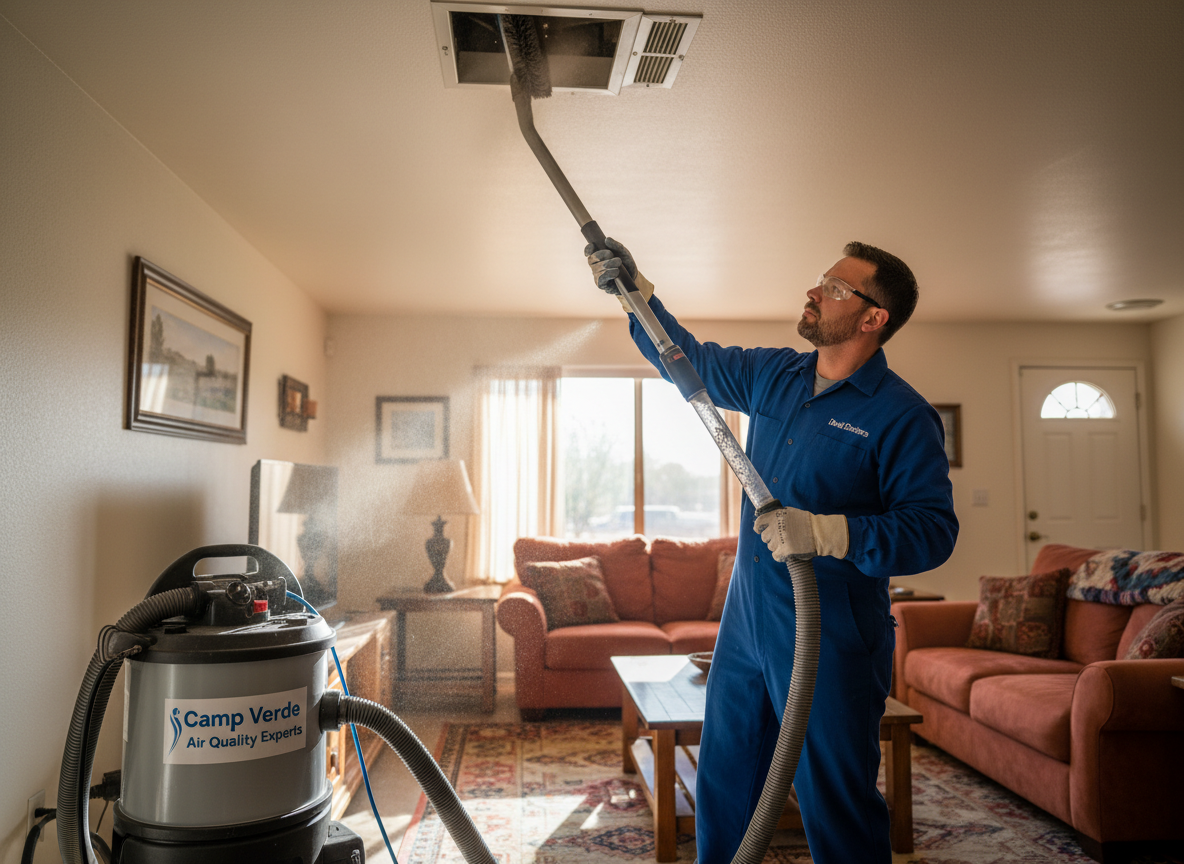
Homes in Camp Verde and Middle Verde often feature duct systems installed decades ago near Fort Verde State Historic Park and along routes to Montezuma Castle National Monument. These older galvanized or flex ducts collect fine red dust from the high desert that settles during warm days and gets pulled in during cool nights when systems cycle more. Technicians must remove registers carefully to avoid damaging aged sheet metal and use brushes sized for the narrower runs common in Yavapai County ranch-style houses.
Sedona and Cottonwood winds carry extra pollen and grit into unsealed attics, so vent cleaning here frequently reveals blocked return paths that force systems to run longer. We inspect for disconnected sections where soil movement has shifted foundations slightly, a common issue on the valley floor. Negative-pressure equipment pulls debris without pushing it into living spaces, and we always check dryer vents tied into the same trunk lines because lint combines with dust to create stubborn blockages.
After cleaning we reseal joints with mastic rather than tape that fails in temperature swings between hot afternoons and cold nights. Homeowners in Middle Verde often notice improved airflow immediately once the fine silt that coats coils is removed, especially in systems serving single-story homes built before modern filtration standards.
Technician insight
In Camp Verde, the thing that catches most people out with air vent cleaning is how much fine red dust from the high desert settles in the return runs during the cool nights when systems run longer. Older homes near Fort Verde often have flex duct that collapses if you push too hard, so you have to work from both ends or the job takes twice as long.
Middle Verde ranch house with blocked returns
A single-story home near Middle Verde had weak airflow in two bedrooms. Inspection showed the return trunk half full of desert silt mixed with pet hair. We agitated the lines from the attic access and pulled everything through the main trunk. Airflow returned to normal and the homeowner reported the system cycling less during warm afternoons.
How it works
- 1
Initial Inspection
We arrive at the Camp Verde address and examine accessible vents, returns, and the main trunk to note duct material, age, and visible dust load before starting.
- 2
Register and Access Removal
Registers are removed and labeled, then openings are sealed to the vacuum system so debris stays contained during agitation.
- 3
Agitation and Extraction
Rotating brushes and compressed air dislodge dust from duct walls while the vacuum pulls material out through the main trunk line.
- 4
Final Check and Reassembly
We inspect for remaining debris, reattach registers, and test airflow to confirm the system moves air evenly again.
Pricing
Pricing varies by number of vents, duct length, and access difficulty; we provide an upfront quote after inspection.