2026-10-24 ·
How Wildfire Smoke Impacts Air Ducts in the Camp Verde Area
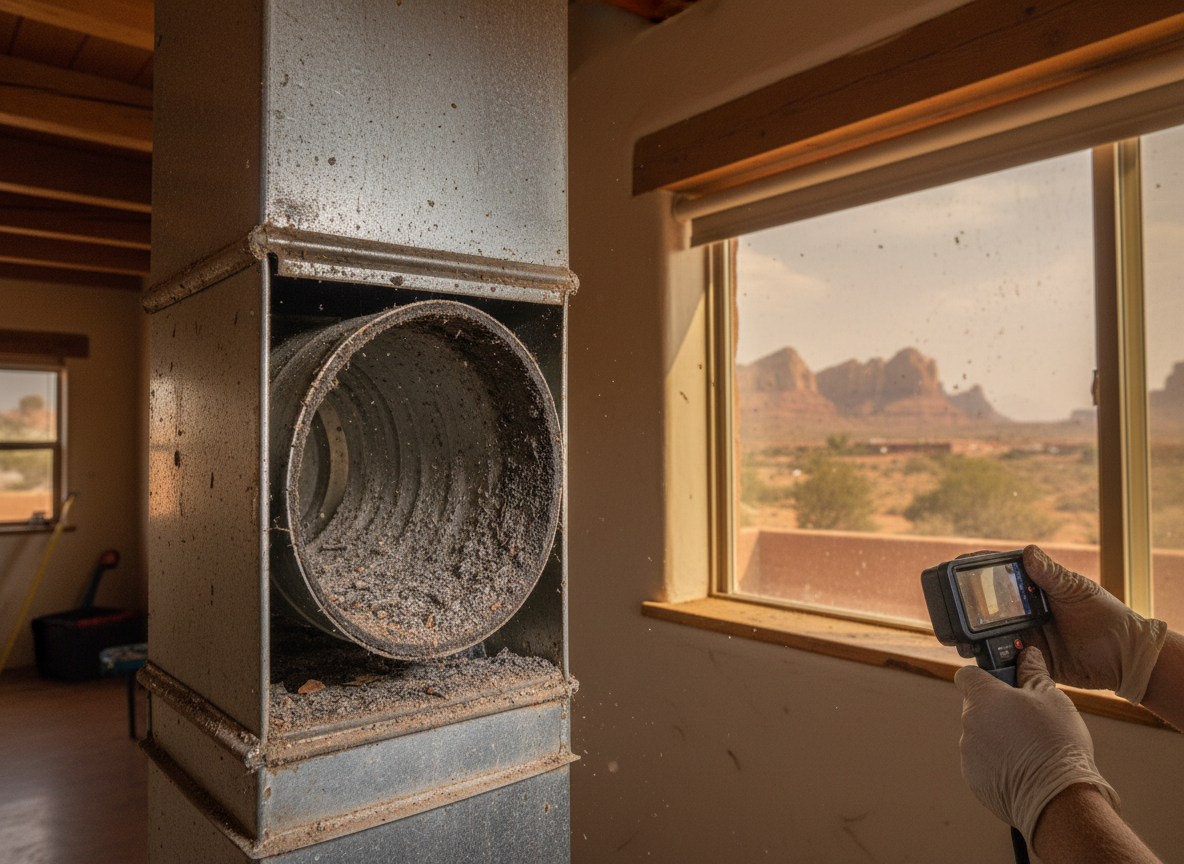
Wildfire smoke deposits fine particulate matter deep inside air ducts throughout Camp Verde homes, often reducing airflow by 15-30 percent and leaving persistent odors that can remain for 3-6 months after fires in the surrounding Yavapai County forests.
Smoke Entry Points in High Desert Conditions
High desert winds common around Camp Verde and Middle Verde push smoke from wildfires near Sedona or Cottonwood through every seam in residential duct systems. Homes built near Fort Verde State Historic Park and Montezuma Castle National Monument frequently feature older duct runs with gaps that allow 2.5-micron particles to travel into living spaces. These particles cling to metal surfaces and insulation, especially when nighttime temperatures drop and systems cycle less often. The terrain funnels smoke along the Verde River corridor, increasing exposure for properties in lower elevations compared to higher ridges.
Effects on Airflow and Indoor Air Quality
Fine ash from regional fires coats blower motors and coil surfaces, forcing HVAC units to work harder during warm days that reach 95 degrees. In Yavapai County, this buildup compounds with dust from the high desert soil, creating layers that restrict air movement through 6-inch and 8-inch branch lines common in local ranch-style homes. Residents notice musty smells returning each time the system restarts, even weeks after visible smoke clears. The combination of cool nights and low humidity helps particles stay suspended longer before settling, extending the time before natural clearance occurs.
Challenges in Older Camp Verde Housing Stock
Many homes near Fort Verde State Historic Park have original ductwork installed 30-50 years ago with unsealed joints that trap smoke residue in hard-to-reach elbows. These systems often run through attics where daytime heat exceeds 110 degrees, baking particles onto surfaces and creating secondary odors when humidity rises. Properties in Middle Verde with evaporative coolers face additional issues as smoke mixes with water residue, forming sticky deposits that standard vacuuming cannot remove. Checking registers in each room reveals uneven airflow patterns that indicate blockages forming after major fire events.
Practical Steps After Regional Wildfire Events
Begin by running the system on fan-only mode for short periods while monitoring filter condition every 48 hours during active fire seasons. Replace standard filters with MERV-13 versions to capture smaller particles before they recirculate. For homes near Cottonwood or Sedona that receive heavy smoke, schedule a full inspection of main trunk lines and return air pathways to locate concentrated buildup. Emergency air duct cleaning addresses urgent cases where odors affect daily living. Properties with pets or allergy concerns benefit from targeted removal of settled ash, detailed further in air duct cleaning for allergies.
Long-Term Considerations for Local Homes
Smoke residue can shorten filter life from the usual 90 days to 30-45 days in the months following nearby fires. Duct cleaning becomes necessary when airflow measurements show drops exceeding 20 percent from pre-fire baselines. Homes in the Camp Verde area with duct runs passing through crawl spaces face extra challenges from soil moisture that binds particles into harder clumps. Regular visual checks at supply vents near Fort Verde State Historic Park locations help catch issues early. Readers managing older properties may also review air duct cleaning considerations for older homes near historic Camp Verde for additional guidance on system age and smoke retention.